

The Faroe Islands are one of the most distinctive travel destinations in the world. Located between Iceland, Norway and Scotland. Travelling to the Faroe Islands offers dramatic landscapes, quiet villages and a strong sense of place shaped by the ocean and the mountains.
Visitors often arrive expecting impressive scenery. What many discover is a destination where nature, culture and everyday life remain closely connected. The islands are remote, yet surprisingly accessible, and travelling here often feels both adventurous and comfortable at the same time.
This guide introduces the Faroe Islands and explains how the country is structured, how travellers move around the islands, and what to expect when planning a visit.

Introduction to the Faroe Islands
The Faroe Islands are a small island nation in the North Atlantic Ocean made up of 18 islands. Although the country covers a relatively small geographical area, the landscape is diverse and dramatic, shaped by steep mountains, deep fjords and open ocean.
Understanding how the islands are connected, how communities are spread across the landscape and how nature influences everyday life helps visitors experience the destination in a more meaningful way.
Where the Faroe Islands are located
The Faroe Islands lie roughly halfway between Iceland, Norway and Scotland.
Most visitors arrive through Vágar Airport, located on the island of Vágar. From the airport it takes around 45 minutes to reach Tórshavn, the capital and largest town in the country.
Despite the islands’ remote location in the North Atlantic, travel connections are reliable and the journey from major European hubs is relatively short and easy.
A small country in the North Atlantic
The Faroe Islands have a population of just over 50,000 people. Communities are spread across the islands in small towns and villages, many of which developed around natural harbours where fishing boats could safely reach the sea.
Fishing and aquaculture remain central parts of the Faroese economy, and the ocean continues to shape everyday life across the islands.
At the same time, the Faroe Islands are a modern Nordic society with strong infrastructure, high living standards and an impressive transport network connecting the islands.
Roads, bridges, subsea tunnels and ferries make it possible to move efficiently between regions that once felt far apart.
Why the Faroe Islands attract travellers today
In recent years, the Faroe Islands have become an increasingly popular destination for travellers seeking dramatic landscapes and authentic experiences.
Unlike many larger destinations, the Faroe Islands remain calm and uncrowded even during the busiest months of the year.
Visitors often come for the scenery, but many leave with an appreciation for something deeper: the rhythm of life in a small island society, the constantly changing weather, and the strong connection between people and nature.
Although the islands feel remote and untouched, they are surprisingly easy to reach, which allows travellers to experience a truly distinctive destination without long and complicated journeys.
The landscapes of the Faroe Islands
The landscapes of the Faroe Islands are the main reason many travellers choose to visit the country. Across the islands, steep mountains rise directly from the ocean, valleys open towards narrow fjords, and cliffs stretch along the coastline.
Although the islands cover a relatively small area, the variety of scenery is remarkable. Within a single day you will experience waterfalls, high mountain passes, quiet villages and dramatic coastal viewpoints.
For visitors, this means that exploring the islands is not only about reaching famous locations, but also about experiencing the landscapes that appear along the way.
Mountains, cliffs and fjords
The Faroe Islands are often described as one of the most dramatic landscapes in the North Atlantic.
The terrain is dominated by steep mountains, grassy ridges and deep fjords carved into the islands by geological forces and centuries of ocean weather. In many places, the mountains rise sharply from the sea, creating coastal cliffs that rank among the highest in Europe.
Small villages are often located where valleys meet the ocean. These natural harbours provided shelter for fishing boats and became the foundation for many Faroese communities.
As a result, the scenery visitors experience today reflects both natural geography and centuries of settlement shaped by the coastline.

Waterfalls and dramatic coastlines
Waterfalls are a defining feature of the Faroese landscape. After rainfall, streams flow down the mountains and form countless waterfalls across the islands.
Some waterfalls appear high in the mountains, while others fall directly towards the sea. These coastal waterfalls have become some of the most photographed landscapes in the country.
Because the islands are relatively compact, many of these viewpoints can be reached within short driving distances. At the same time, the experience often feels remote and untouched.
Travellers frequently combine several scenic locations during a single day of exploring the islands.

A landscape that changes with the weather
One of the most unique aspects of the Faroe Islands is how quickly the landscape can change during the day.
Locals always say that it is possible to experience several seasons within a single day. Sunshine may illuminate one valley while clouds move through the mountains nearby. Fog can appear suddenly along the coast before clearing again within no time.
These changing conditions constantly transform the scenery. A familiar viewpoint may look completely different depending on the weather, the wind and the light.
For many visitors, this unpredictability becomes part of the experience of travelling through the islands.
Understanding the seasons and how they influence weather conditions can help travellers plan their visit more effectively. You can learn more in Best Time to Visit the Faroe Islands, where we explain how each season shapes the experience of travelling here.
Faroese villages and everyday life
While the dramatic landscapes often receive the most attention, the villages and communities across the Faroe Islands are just as important to understanding the country.
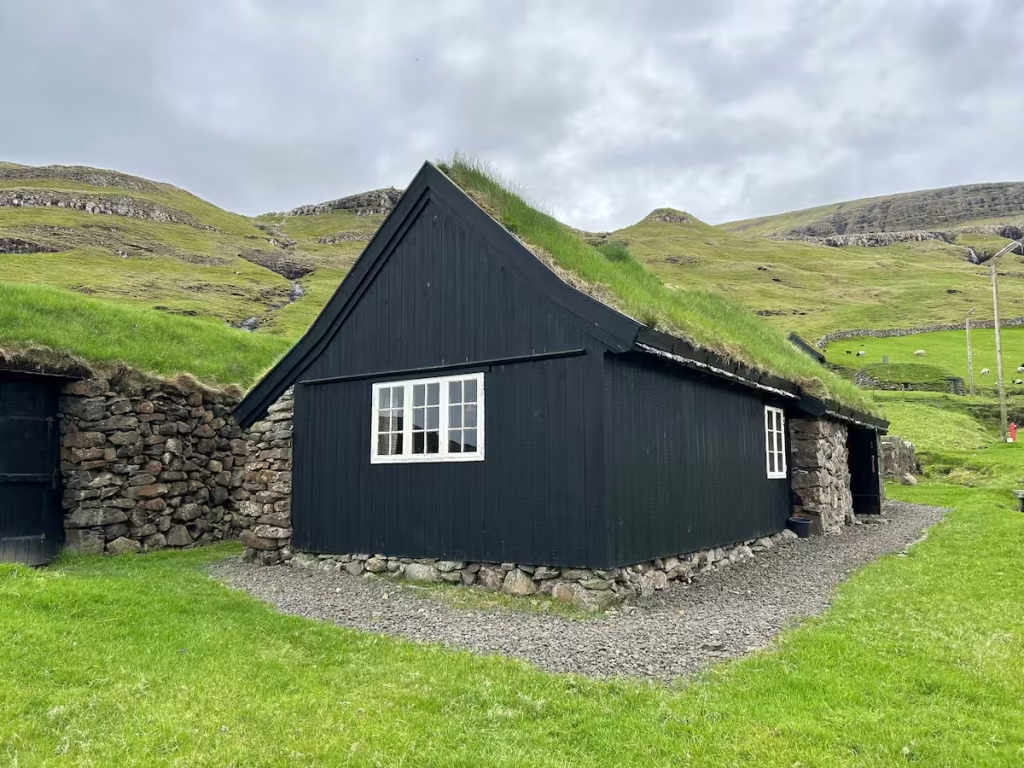
Across the archipelago, small towns and villages are spread along fjords, valleys and sheltered harbours. Many of these communities have existed for centuries and remain closely connected to the landscapes around them.
Fishing has historically shaped life across the islands, and many villages developed around natural harbours where boats could safely reach the sea. At the same time, sheep farming continues to influence the landscape, with around 70,000 sheep grazing across the mountains and valleys of the islands.
Because the Faroe Islands are a small society, communities remain closely connected. People often know each other across villages and regions, and daily life unfolds at a calm and familiar pace.
Visitors travelling through the islands are therefore moving through living communities rather than isolated sightseeing locations. Fishing boats still leave early in the morning, sheep graze on the hills surrounding the villages, and everyday life continues much as it always has.
Understanding this local rhythm helps visitors experience the islands with greater awareness and respect.
For a deeper understanding of Faroese customs, traditions and everyday life, see Understanding Local Life in the Faroe Islands.
Getting to the Faroe Islands
Despite their remote location in the North Atlantic, the Faroe Islands are relatively easy to reach from several parts of Europe. Most visitors arrive by air through Vágar Airport, which serves as the main international gateway to the country.
The airport is located on the island of Vágar, and from here it takes around 45 minutes to reach Tórshavn. Because the islands are compact, travellers can often begin exploring some of the surrounding landscapes already on their arrival day.
In addition to flights, the Faroe Islands are also connected to Denmark and Iceland by ferry across the North Atlantic. Arriving by sea offers a slower and more scenic journey, with the ferry docking directly in the harbour of Tórshavn.
Travel connections operate throughout the year, making the islands accessible despite their location in the middle of the North Atlantic.
For a detailed overview of routes, airlines and ferry connections, see Getting to the Faroe Islands.

Getting around the Faroe Islands
Travelling around the Faroe Islands is easier than many visitors expect. Although the country consists of 18 islands spread across the North Atlantic, modern infrastructure connects much of the archipelago through roads, bridges and subsea tunnels.
Several of the main islands are linked by tunnels running beneath the ocean, which has significantly reduced travel time between regions. In addition, ferries connect islands that are not accessible by road.
Driving distances are relatively short compared with most countries. What locals describe as a long drive often means around one hour. Because the landscapes change quickly from one valley or fjord to the next, even short drives can reveal completely different scenery.
Some smaller roads leading to remote villages can be narrow or steep, but they are part of the experience of travelling through the islands.
For visitors who plan to explore several islands, understanding how tunnels, ferries and regional geography work together makes travel much smoother.
For a more detailed explanation of transportation, tunnels and ferry routes, see Getting Around the Faroe Islands.
The seasons in the Faroe Islands
The Faroe Islands can be visited throughout the year, and each season offers a different way of experiencing the islands. Weather conditions, daylight hours and the rhythm of local life change noticeably between seasons, which means that the atmosphere of the islands can feel very different depending on when you visit.
Unlike many destinations, the Faroe Islands do not follow predictable weather patterns. Locals often say that it is possible to experience several seasons in a single day. Sunshine, rain, fog and wind can move quickly across the islands, creating landscapes that constantly change throughout the day.
Understanding how the seasons shape travel conditions can help visitors plan their trip in a way that matches their interests and expectations.
A full overview can be found in Best Time to Visit the Faroe Islands.
Spring
Spring gradually brings the islands back to life after the darker winter months. Migratory birds return to the cliffs, lambs begin appearing across the hillsides and daylight hours increase quickly.
The landscape starts to turn greener again, and many visitors appreciate the calm atmosphere before the summer period begins.
Learn more in Spring in the Faroe Islands.

Summer
Summer brings the longest days of the year and the most stable travel conditions. It is the busiest time for visitors, and most tours, ferries and activities operate at full capacity during these months.
Even during the summer season, however, the islands rarely feel crowded compared with many other destinations.
More information can be found in Summer in the Faroe Islands.
Autumn
Autumn introduces a quieter atmosphere across the islands. Visitor numbers drop, and the landscapes often feel more dramatic as weather systems move across the North Atlantic.
Wind and rain can create powerful coastal scenery, and waterfalls often become stronger during this period.
Read more in Autumn in the Faroe Islands.
Winter
Winter is the calmest time of year in terms of visitor numbers. The days are shorter and the weather can be powerful, but many travellers appreciate the peaceful atmosphere and the dramatic winter landscapes.
Stormy seas, changing skies and snow in the mountains reveal a different side of the Faroe Islands.
More details can be found in Winter in the Faroe Islands.

Northern Lights
During the darker months of the year, there is also a chance of seeing the northern lights in the Faroe Islands. Unlike destinations further north, northern lights here are not the main attraction of a trip, but they can appear as a memorable bonus when conditions are right.
Where to stay in the Faroe Islands
Accommodation in the Faroe Islands is generally centred around the capital, Tórshavn. The city functions as the main hub for restaurants, shops and cultural life, and its central location makes it a practical base for exploring many parts of the country.
From Tórshavn it is possible to reach a large number of well known landscapes, villages and viewpoints within relatively short driving distances. Because of this, many travellers choose to stay in the capital for most or all of their trip.
At the same time, accommodation is also available in several other towns and villages across the islands, which can create a very different travel experience.
For a detailed overview of hotels and accommodation options across the country, see Accommodation in the Faroe Islands.
Hotels in Tórshavn
Most hotels in the Faroe Islands are located in or around Tórshavn. Several four star hotels offer comfortable stays with views over the surrounding landscape, while smaller hotels provide slightly more modest but still comfortable accommodation.
During the summer months in particular, availability can become limited if accommodation is not booked in advance.
For many visitors, however, staying in Tórshavn works well because it provides easy access to restaurants, cafés and cultural attractions while still allowing day trips across the islands.

Staying in smaller towns and villages
Some travellers prefer to spend part of their stay outside the capital.
Across the islands there are smaller hotels, guesthouses and cottages located in villages and rural areas. These accommodations often offer a quieter atmosphere and closer proximity to nature.
For longer visits, some travellers choose to divide their stay between different regions of the islands. This can make it easier to explore both the northern and southern parts of the archipelago without returning to the same base each evening.
Regardless of where visitors choose to stay, the distances between most locations remain relatively short compared with many other travel destinations.
Preparing for your trip
A journey to the Faroe Islands does not require complicated preparation, but understanding a few practical aspects of travel can make the experience significantly smoother.
The islands are a modern Nordic society where infrastructure, services and digital payments function much like in other parts of Northern Europe. At the same time, the landscape, weather and small scale of the country mean that travelling here can feel different from visiting larger destinations.
Being prepared for changing weather conditions, understanding how local services operate and planning accommodation and transportation in advance all help ensure a more relaxed and enjoyable visit.
Packing for Faroese weather
Weather conditions in the Faroe Islands can change quickly. Wind, rain and fog can move rapidly across the landscape, while sunshine may appear just as suddenly.
Because of this, layered clothing and waterproof outerwear are among the most useful items to bring. Good footwear is also important when walking in villages, exploring viewpoints or hiking in the mountains, where paths can sometimes become wet or slippery.
For a detailed overview of what to bring, see Packing List for the Faroe Islands.
Currency and practical information
The Faroe Islands use Danish and Faroese kroner, which function as the same currency even though the banknotes differ in design. Most places accept card payments, and digital payment solutions such as Apple Pay and Google Pay are widely used.
Cash is rarely required, although a small amount can occasionally be useful in smaller locations.
Visitors will also notice that the country operates on a relatively small scale. Some shops close on Sundays, and certain restaurants may have limited opening days outside the summer months.
More practical information about currency, payments and everyday travel details can be found in Currency & Practical Information in the Faroe Islands.
Experiencing the islands with a local guide
Travelling through the Faroe Islands can be done independently, but many visitors find that exploring the islands with a local guide adds an entirely different dimension to the journey.
The landscapes are impressive on their own, yet much of what makes the islands unique lies in the stories, traditions and everyday life that are not immediately visible to visitors. Local guides often grow up in the communities travellers pass through and can share insights about Faroese culture, nature and society that are difficult to discover alone.
Guides can also help adjust plans when weather conditions change and introduce visitors to local experiences that reflect the character of the islands.
You can learn more about these experiences in Private Guided Tours in the Faroe Islands.
Planning your journey
A journey through the Faroe Islands is often defined by the landscapes, the changing weather and the quiet rhythm of life across the islands.
Because the country consists of several islands connected by tunnels, roads and ferries, planning the structure of a trip can make a noticeable difference to how smoothly the journey unfolds. Choosing the right regions to explore, allowing time to move through the landscapes and adapting plans to local conditions all contribute to a more relaxed and rewarding experience.
At Faroe Voyage we specialise in tailor-made journeys designed with local knowledge of the islands. By combining transportation, accommodation and local experiences in a thoughtful way, we help travellers experience the Faroe Islands at a natural pace.
Learn more about how we design Tailor-made Faroe Islands tours or contact us to begin planning your journey.
You must be logged in to post a comment.